Best Fire Blankets for the Kitchen: What Actually Works on a Grease Fire
A fire blanket is often the safest first response to a pan fire, and most people do not own one. Here's how to choose the right fire blanket—and the ones I'd recommend for your home.
Key takeaways
- A fire blanket is single-use — the standard sellers cite (BS EN 1869:2019) says so explicitly, whatever the listing claims.
- Buy a multipack. A blanket you're afraid to "waste" is worse than two you'll use without hesitating.
- Mount it by the kitchen door, not behind the stove — or you're reaching through the flames to grab it.
Most kitchens have a smoke alarm. A good number have an extinguisher tucked in a cupboard somewhere. Almost none have the one thing that is genuinely easiest to use in the first ten seconds of a pan fire, which is a fire blanket. That gap bothers me because the blanket is the tool built for the exact moment most people face. Not a house fire. A pan of oil that has gone too far while you were right there. In that moment, you do not want to be reading instructions on a canister or hunting for a pin. You want to grab something, cover the pan, and have it over.
So this is what a fire blanket does well, what it does not do, what size actually matters, and the blankets I would keep in my own kitchen. I have researched and compared these rather than set fires with them, and I will be clear throughout about what is established fact and what is my judgment.
What a fire blanket actually does
Fire needs three things to keep burning: fuel, heat, and oxygen. On a stovetop, you cannot remove the fuel, and the burner has already supplied the heat. So the only lever you have is oxygen, and cutting it off is exactly what a blanket does. You lay it over the pan, the flames are sealed off from the air, and the fire dies.
That is why it works on grease specifically, and why water does the opposite. Water sinks beneath burning oil, flashes instantly to steam, and throws the burning oil up and outward. Smothering works. Drowning does not. I have written a full, step-by-step guide on how to safely put out a grease fire, and I would rather you read it while you are calm than need it when you are not.
Blanket or extinguisher? Let the fire decide
People treat these as competitors, and they are not. They own different moments, and the honest answer is that a well-prepared kitchen has both.
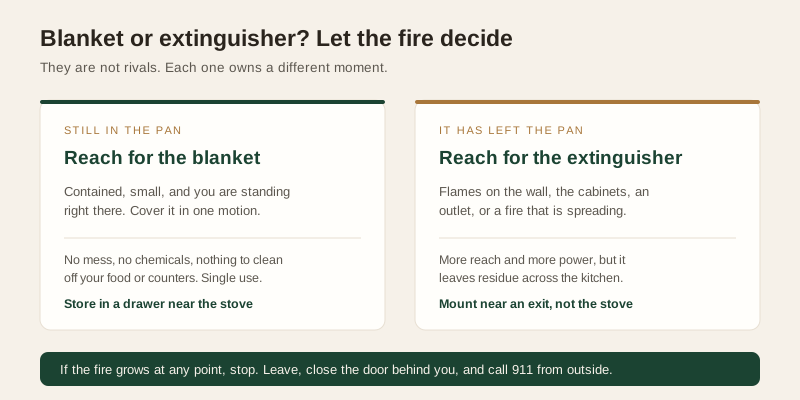
If the fire is still in the pan and you are standing right there, the blanket is the better tool. One motion, no mess, nothing sprayed across your counters and food, and nothing to aim under pressure.
If the fire has left the pan, reached a cabinet, a curtain, an outlet, or started somewhere the blanket cannot cover, you need the reach and power of an extinguisher.
And if the fire is growing at all while you decide, stop deciding. Leave, close the door behind you, and call for help from outside. No pan is worth this.
What to look for before you buy
Four things genuinely matter. Most of the rest is packaging.
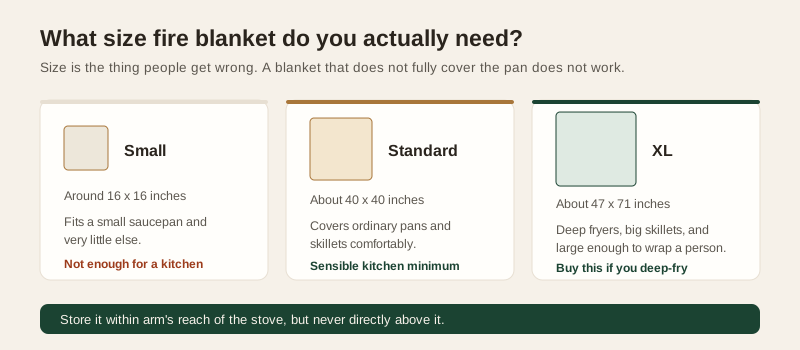
Size is the one thing people get wrong. A small blanket handles a small saucepan and very little else. A blanket around 40 by 40 inches is a sensible kitchen minimum, and a larger one, roughly 47 by 71 inches, covers a big skillet or a deep fryer and is the size generally intended to be wrapped around a person whose clothing has caught fire. If you deep-fry, or you want the option of that second use, buy the larger one.
Material and rating come next. Look for woven fiberglass with a stated temperature rating and a recognized standard on the packaging, commonly EN 1869 in Europe. Standards labeling in the United States is less consistent, so treat the presence of a clear specification as a good sign and vague marketing language as a reason to look elsewhere.
The pull tabs matter more than you would think. In a panic, with adrenaline running, you want two clear tabs that release the blanket in one downward yank. Fiddly packaging is a genuine safety failure.
And mounting. A blanket in a box at the back of a cupboard is a blanket you will not reach in time. Choose one with a hanging hook or a wall pouch, and put it within arm's reach of the stove but never directly above it, so you are never reaching through flames.
The four picks at a glance
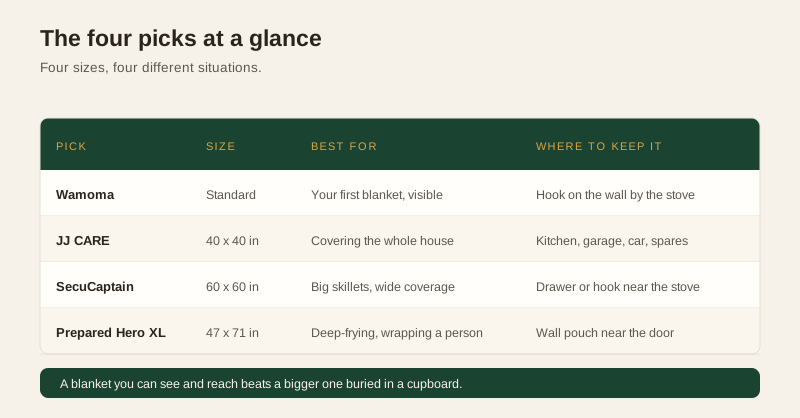
If you take one row from that table, take the first. A blanket you can see and reach beats a bigger one buried in a cupboard.
The blankets I would keep in my kitchen
Four picks for four different situations. Each link goes straight to Amazon, so you can check the current price and availability, which change too often for me to quote here. I have researched and compared these rather than set fires with them, and I will be plain about what each one is and is not.
And for completeness, the blanket I featured in my suppressor guide was the Tonyko, which remains a straightforward budget option if you simply want something cheap in the drawer today. I have not repeated it here because this post is about giving you a real spread to choose from rather than the same product in every article.
If your kitchen has none of these, buy one and put it within reach of the stove this week. That single act closes the biggest gap in most kitchens, and it costs less than a takeout meal.
How to actually use one
Worth reading now, while nothing is on fire.
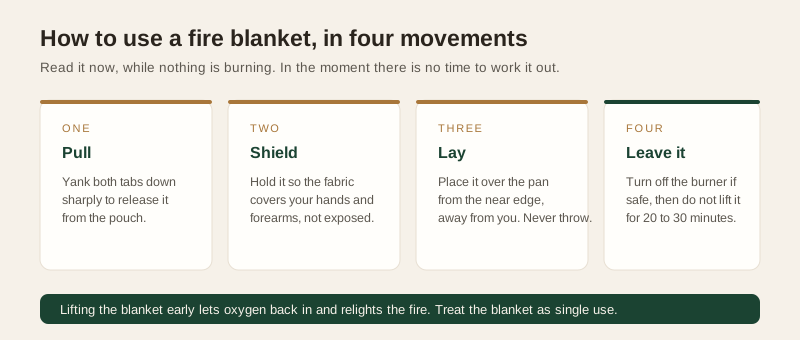
Pull both tabs down sharply to release the blanket. Hold it so that the fabric shields your hands and forearms, with your hands behind it rather than exposed in front. Lay it over the pan from the near edge and away from you so any flare goes away from your body rather than up into your face. Do not throw it, because a thrown blanket lands crooked and can fan the flames.
Once it is on, turn off the burner if you can reach the knob safely, and then leave it completely alone. The pan stays dangerously hot for a long time, and lifting the blanket early lets oxygen back in and relights everything. Give it a solid twenty to thirty minutes.
Treat the blanket as single-use. Once it has covered a fire, replace it.
The layer above this one
A blanket only helps if you are in the room. That is its honest limit.
For the fires that start when nobody is watching, when you have stepped out, fallen asleep, or left the house believing the burner was off, the only thing that works is something automatic. That is a different device with a different job, and I have covered the options in our guide to the automatic stovetop fire suppressor.
For everything else across fire, gas, burns, and childproofing, see the complete kitchen safety guide.
The four products
Prepared Hero Emergency Fire Blanket (2-Pack)
- Two blankets so you can cover two spots
- The most widely recognised, no learning curve
- Hang-up pouch keeps it visible and grab-ready
- Single-use, replace after any deployment (true of all fire blankets)
- No mounting hooks included, so you supply your own placement
Tonyko Fire Blankets (7-Pack)
- Best cost-per-blanket by a wide margin
- Enough to cover the kitchen, garage, grill and cars
- Takes the single-use reality seriously — spares to replace used ones
- More than most single-kitchen homes strictly need
- No mounting hooks, placement is on you
Wamoma Fire Suppression Blanket (with Hooks)
- Ships with hooks, so it goes on the wall where it belongs
- Solves the most common mistake — a blanket forgotten in a drawer
- Visible and grab-and-go by the exit
- Single blanket rather than a multipack
- Single-use, like every fire blanket
JJ Care Fire Blanket (2-Pack, with Hooks & Gloves)
- The most complete first purchase — blankets, hooks and gloves in one box
- Gloves matter, you'll be holding a barrier near open flame
- Two blankets plus the means to mount them
- Costs a little more for the added gloves and hooks
- Single-use, replace after any deployment
Compare all four
| Product | Ships with hooks | Pack size | Best for | |
|---|---|---|---|---|
| Prepared Hero Emergency Fire Blanket (2-Pack)Our pick | No | 2-pack | Simple default, no learning curve | Check price |
| Tonyko Fire Blankets (7-Pack)Best value | No | 7-pack | Whole house, garage and cars | Check price |
| Wamoma Fire Suppression Blanket (with Hooks)Best mounted | Yes | 1 blanket | Right-place mounting | Check price |
| JJ Care Fire Blanket (2-Pack, with Hooks & Gloves)Starter kit | Yes | 2-pack | First-time buyers | Check price |
Buy a multipack. Mount it by the door. Replace it after you use it.
The blanket costs so little there's no reason to buy just one — the Tonyko 7-pack or Prepared Hero 2-pack means you're never hesitating to use one because you don't want to "waste" it. Whichever you choose: mount it by the door, use it only while the fire's still in the pan, and when it's done its job, throw it away and buy another one.
Frequently asked questions
Do fire blankets work on grease fires?
Yes, and grease is exactly what they are best suited to in a home kitchen. A blanket smothers the fire by cutting off oxygen, which is the correct response to burning oil. Water is not, because it makes burning oil erupt.
What size fire blanket do I need for a kitchen?
About 40 by 40 inches is a reasonable minimum for ordinary pans. If you deep-fry, use large skillets, or want a blanket big enough to wrap around a person, choose the larger size, roughly 47 by 71 inches.
Can you reuse a fire blanket?
Treat it as single use. Once it has been used on a fire, the material has been through thermal stress you cannot assess by looking at it. Replace it rather than folding it back into the drawer.
Where should I store a fire blanket?
Within arm's reach of the stove but never directly above it, so you are never reaching over flames to get it. A drawer beside the stove or a wall pouch on an adjacent wall both work well.
Is a fire blanket better than a fire extinguisher?
Neither is better overall, because they cover different moments. The blanket is faster and cleaner for a fire still contained in a pan. The extinguisher has the reach and power for a fire that has spread beyond it. A well-prepared kitchen has both.
Do fire blankets expire?
Many carry a manufacturer's recommended replacement date, and the packaging or hook can degrade over time even if the fabric looks fine. Check the packaging for a date, and replace it after any use.

Olive Tina
I lived through a kitchen grease fire in my own home. Afterward, I spent months researching what would have actually stopped it — that's how HouseholdShield started.