Which Fire Extinguisher Do You Actually Need in a Kitchen?
Most people own the wrong extinguisher or the right one in the wrong place. Here is which class a home kitchen actually needs and where it should hang.
Ask most people whether they have a fire extinguisher, and they will say yes, probably. Ask where it is, and there is a pause. Ask what class it is, and the conversation usually ends.
Cooking is the leading cause of home fires in the United States, and the fire that starts in a pan of hot oil behaves nothing like a burning wastepaper basket. It spreads in seconds, it can't be put out with water, and the wrong response will make it dramatically worse.
This guide covers what the letters on the canister actually mean, which one belongs in your kitchen, and — honestly — when you should not be fighting the fire at all.
What class do I need
A, B, C and K: what the letters mean
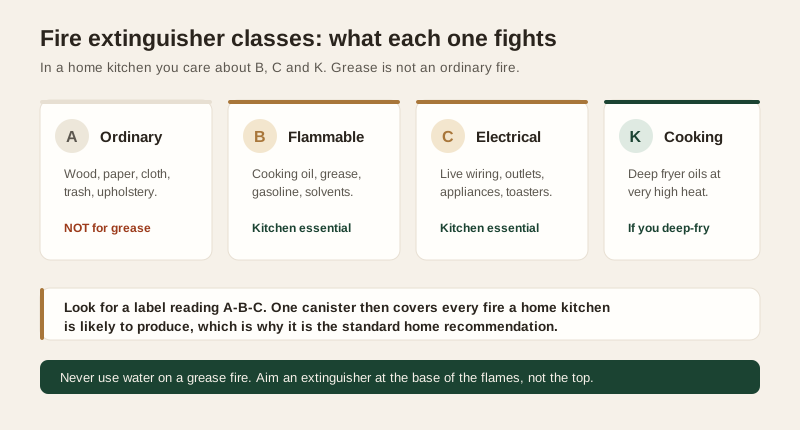
Extinguishers are classified by the type of fire they are designed to fight, and using the wrong one can make things worse rather than better.
Most kitchens need one multipurpose ABC extinguisher, mounted near the exit, plus a fire blanket kept within arm's reach of the stove.
If you deep-fry regularly, add a Class K unit. That's the whole recommendation. It is the standard home recommendation for exactly that reason.
Why a kitchen fire is a different animal
Fire extinguishers are rated by letter, and each letter is a category of fuel.
- Class A — ordinary combustibles: wood, paper, cloth, upholstery and trash. These are usually water or foam-based, and this is the class you specifically do not want alone in a kitchen, because water on burning oil causes an eruption.
- Class B — flammable liquids: cooking oil, grease, petrol, solvents.. This is the class a stovetop fire falls into, and it is the reason a plain Class A unit is the wrong tool.
- Class C — electrical fires: wiring, outlets, appliances. Which matters in a room full of toasters, air fryers, outlets, and cords.
- Class K — designed for commercial-grade cooking oils and fats burning at very high temperatures. Most home kitchens do not require one, but if you deep-fry regularly, it is worth knowing it exists.
A kitchen can produce all four. A tea towel catches (A). A pan of oil ignites (B). A faulty toaster shorts (C). A deep fryer goes up (K).
This is why a Class A–only extinguisher is close to useless by the stove and why the water-based ones sold for garages and workshops are actively dangerous in a kitchen.
Water on burning oil is the single worst thing you can do. Water is denser than oil, so it sinks straight through to the bottom of the pan, hits metal that is hundreds of degrees hotter than boiling point, and flashes instantly to steam. That steam expands violently and throws burning oil across the room. A small contained pan fire becomes a room fire in about a second.
Same applies to flour and baking powder—both can make things worse. Baking soda and salt can smother very small flames, but you need a lot, and by the time you're measuring, you should have covered the pan instead.
This is the part I care about most, because it is free to get right and very commonly gotten wrong.
Where to put it (and the mistake nearly everyone makes)
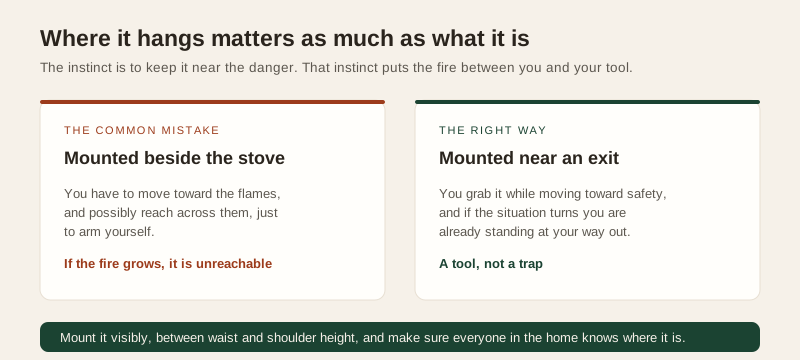
- Mount it near the exit, on your escape path — never directly beside the hob, where a fire would block your access to it. The instinct is to keep it as close to the danger as possible. But think about what that means in practice. If a fire is on the stovetop and the extinguisher is mounted on the wall beside it, you have to move toward the flames and possibly reach across them to arm yourself. If the fire has grown, that route is now blocked, and your extinguisher is on the wrong side of it. Mounted near the doorway, you grab it while moving toward safety, and if the situation turns, you are already standing at your exit. That is the difference between a tool and a trap.
- Between waist and shoulder height, visible, not buried in a cupboard behind the pasta.
- Keep a blanket by the stove — that's the one thing that should be within reach of the fire, because it's your instant response.
- Everyone in the house should know where both are. An extinguisher only you know about protects only you, but the person who needs it may not be you. Mount it visibly rather than inside a cupboard, since seconds spent opening doors are seconds you or members of your household do not have.
Learn PASS before you need it
Thirty seconds of reading now, and you will not be working it out during the worst minute of your year. The technique has a name, so it is easy to remember: PASS.
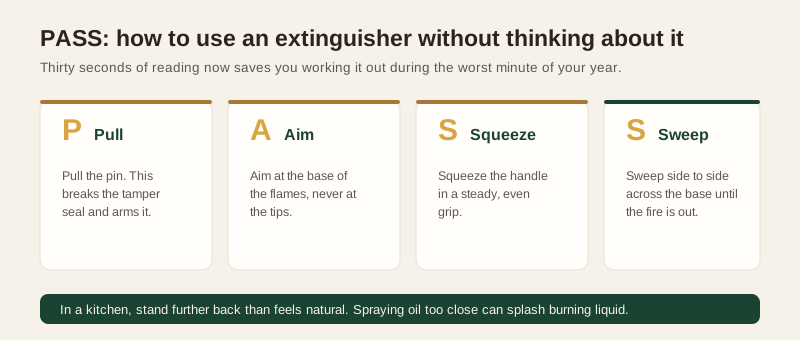
Pull the pin, which breaks the tamper seal. Aim at the base of the flames, not at the top of them, because the fuel is at the base and spraying the flame tips accomplishes nothing. Squeeze the handle in a steady grip. Sweep side to side across the base until the fire is out.
Two extra notes for a kitchen, specifically. Stand back further than feels natural, since spraying a pan of oil too close can splash burning liquid. And after the fire is out, keep watching it, because grease can reignite as it cools unevenly.
The extinguisher I would keep in a kitchen
What the numbers mean
You'll see ratings like 2-A:10-B:C. The letters are the fuel types. The numbers are the capacity.
- The A number roughly indicates water-equivalent volume.
- The B number is the approximate square footage of flammable-liquid fire an average person can put out with it.
So a 10-B rating means roughly ten square feet of burning liquid. For a kitchen, the B number is the one to look at — that's your grease rating. Bigger is better, up to the point where you can't comfortably lift and aim the thing. An extinguisher you can't handle one-handed while frightened is not an extinguisher you can use.
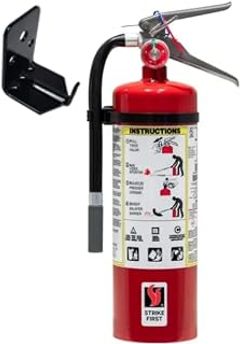
Strike First ABC Fire Extinguisher
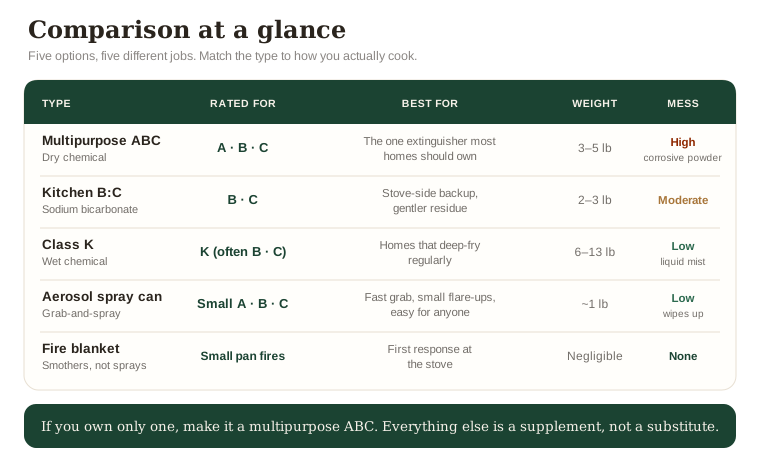
If you buy one thing, buy this. A rechargeable ABC unit with a metal valve, a pressure gauge, and a UL rating around 3-A:40-B:C covers every fire your home can realistically produce, kitchen included. Metal valves matter—the plastic-valve budget units are disposable and often can't be serviced.
Mount it near the kitchen exit, not next to the stove. This is the mistake almost everyone makes. If the extinguisher is behind the fire, you have to walk toward the flames to reach it. You want it on your escape route, so you can grab it on your way out and turn to face the fire with the door behind you.
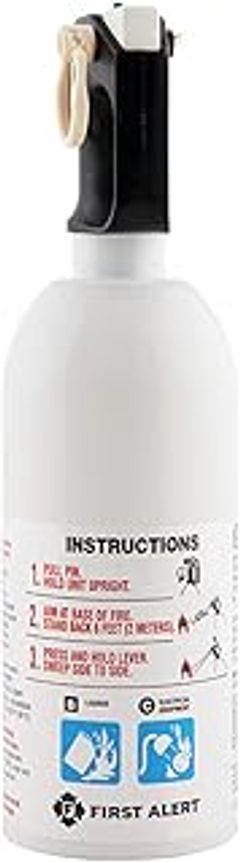
FIRST ALERT KITCHEN5 Fire Extinguisher
Sodium bicarbonate–based, purpose-built for cooking fires, and light enough that anyone in the house can lift and aim it. Rated B:C, so it handles grease and electrical, but not ordinary combustibles—which is why it's a supplement to an ABC unit, not a replacement for one.
Good for a small flat, a rented kitchen, or a second unit to keep the main one company.
Whatever you choose, check two things when it arrives. That the label clearly reads A-B-C, and that the pressure gauge needle sits in the green zone. Then check that gauge every six months, along with your smoke alarm test, so it becomes one habit rather than two.
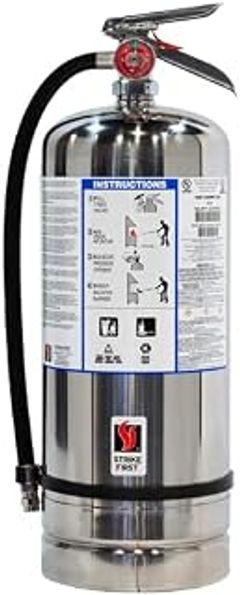
Strike First SF-6LK 6 Liter Wet Chemical Class A K Fire Extinguisher
If you deep-fry, run a turkey fryer, or keep a pan of oil going regularly, this is worth the money. Class K units spray a fine wet mist that reacts with hot fat to form a soapy foam layer on the surface—a process called saponification. It seals the oil off from oxygen and cools it, which matters because hot oil will reignite the moment it hits air again if it's still above its ignition temperature. Dry powder can knock the flames down but leaves the oil hot; wet chemical actually cools it.
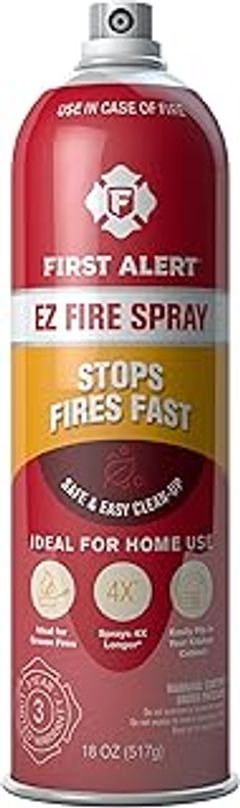
EZ Fire Spray Extinguishing Aerosol (AF400)
- No technique to remember under stress
- Light enough for anyone to handle
- Long discharge time so you're not rushed
- Cleans up with a damp cloth
- Far less capacity than a real canister, for flare-up not fires
- Non-rechargeable, so it's a replacement not a refill
- Not a substitute for an ABC unit near the exit
- Wrong tool once a fire spreads past the pan
It's the priciest option here and overkill for someone who mostly boils pasta. But for a serious frying household, it's the correct tool.
Point and spray, like a can of deodorant. No pin, no PASS technique, nothing to remember while your hands are shaking. The trade-off is capacity—these are for flare-ups, not fires. But they get used, and a mediocre extinguisher that someone actually reaches for beats a perfect one they're afraid of.
Worth keeping in the drawer nearest the hob. Also, the best option if there's anyone in the house who'd struggle with the weight of a full canister.
The extinguisher is layer three, not layer one
I want to be honest about where this device sits, because a kitchen protected only by an extinguisher is not really protected.
For a fire still contained in the pan and you standing right there, a fire blanket is faster, simpler, and cleaner. One motion and it is done, with nothing sprayed across your food and counters.
For a fire that starts when nobody is in the room, neither tool helps at all, because both need a human. That gap is what an automatic stovetop fire suppressor is built for.
The extinguisher earns its place in the moment those two cannot cover, which is a fire that has grown past the pan and needs reach and power to bring down. That is a real and important moment. It is just not the only one.
The full order of response, calmly and step-by-step, is in how to put out a grease fire safely. And for everything across fire, gas, burns, and childproofing, see the complete kitchen safety guide.
The honest part: when not to fight the fire
Every guide like this one wants to sell you an extinguisher. So here's the thing, the product listings won't tell you.
Fire services are consistent on this: an extinguisher is for a small, contained fire that you catch immediately, with a clear escape route behind you. That's it. If the fire has spread beyond the pan, if it's reached the extractor hood or the cabinets, if the room is filling with smoke, or if you're even slightly unsure, you get everyone out, and you call 911 from outside.
House fires double in size in roughly thirty seconds. The time you spend deciding whether to be a hero is time you don't have. An extinguisher buys you a chance at a pan fire. It does not make you a firefighter, and nothing in your kitchen is worth your life.
Get out. Stay out. Call.
Frequently asked questions
Can I use a fire extinguisher on a grease fire?
Yes, but it should not be your first move. Turn off the heat and cover the pan with a metal lid or fire blanket if you can do it safely — smothering is faster and safer than spraying. If that is not possible or the fire has spread beyond the pan, use an extinguisher rated for Class B or Class K. Never use water or a Class A-only extinguisher on burning oil; water turns to steam instantly and can throw flaming grease across the room. If you do use an extinguisher, stand back about six feet and aim at the near edge of the fire so the agent rolls across the surface, rather than blasting down into the oil and splashing it. If the fire is not out within seconds, get everyone out and call 911., Can I use a fire extinguisher on a grease fire?
What class of fire extinguisher do I need for a kitchen?
For most homes, a multipurpose A-B-C extinguisher is the right choice. Class K extinguishers use a wet chemical designed for the high-temperature vegetable oils in commercial deep fryers. They are not necessary for most households but are worth considering if you deep-fry regularly at home. Whichever you choose, keep it near an exit, not right beside the stove, so you are never reaching over flames to get it., What class of fire extinguisher do I need for a kitchen?
Where should a fire extinguisher be mounted in a kitchen?
Near an exit rather than beside the stove, so you move toward safety as you reach for it and are never reaching through flames. Mount it visibly, roughly between waist and shoulder height, and make sure everyone in the home knows where it is., Where should a fire extinguisher be mounted in a kitchen?
How often should I check my fire extinguisher?
Look at the pressure gauge about every six months and confirm the needle sits in the green zone. Pair it with your monthly smoke alarm test so you only have to remember one routine. Replace or service the unit according to the manufacturer's label., How often should I check my fire extinguisher?
Do fire extinguishers expire?
They do have a service life, and disposable home units are generally replaced rather than refilled once they expire or lose pressure. Check the label on yours for the manufacturer's guidance, and replace it after any use, even a brief one., Do fire extinguishers expire?
What does PASS stand for?
Pull the pin, Aim at the base of the flames, Squeeze the handle, Sweep side to side. Learning it before you need it is the difference between using the device and fumbling with it., What does PASS stand for?
More on Kitchen Safety
Browse every guide and comparison we've published in Kitchen Safety.
Keep reading

Olive Tina
I lived through a kitchen grease fire in my own home. Afterward, I spent months researching what would have actually stopped it — that's how HouseholdShield started.