Best Under-Sink Cabinet Locks to Keep Kids Out of the Chemicals
The cabinet under your sink usually holds the most dangerous things in the house at a toddler's eye level. Here are the locks that actually keep it shut, chosen by the kind of cabinet you have, not by hype.
If you only lock one cabinet in your whole home, make it the one under the sink. It usually holds the most concentrated collection of hazards a small child can reach: drain cleaner, dish soap, bleach, dishwasher pods, sometimes the bin. And it sits at exactly toddler height, behind a door they've watched you open a hundred times. Household cleaning substances are consistently among the top causes of poisoning exposures in young children, and the under-sink cabinet is where most of them live.
So this is the highest-value lock you'll buy. The catch is that "cabinet lock" covers several very different mechanisms, and the right one depends on the kind of cabinet you have. Buy the wrong type and it either won't fit or won't hold. Let me match the lock to your cabinet, then give you the picks.
Before you even buy a lock, one thing matters more: move the worst chemicals up high, out of the cabinet entirely, and lock what has to stay. The full reasoning is in how to store cleaning chemicals safely with kids around. A lock is the second layer, not the first.
First, what kind of cabinet do you have?
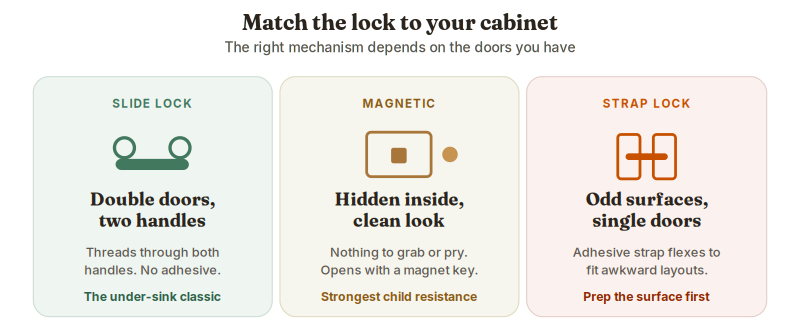
Under-sink cabinets come in a few configurations, and this decides your lock:
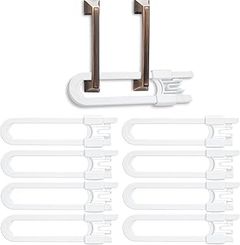
Double doors with two handles or knobs (the most common). A U-shaped slide lock threads through both handles, physically holding them together. No adhesive to fail. This is often the simplest, most reliable choice for the classic under-sink cupboard.
Double doors with no handles, or a clean modern look. A magnetic lock mounts hidden inside the cabinet, invisible from outside, released by a magnetic key. Nothing for small fingers to grab or pry.
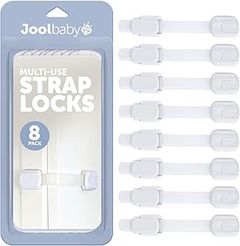
A single door, or odd surfaces. An adjustable strap lock adhesives to the frame and the door, flexible enough for awkward layouts.
Match the mechanism to your cabinet first, and everything else gets easier.
How I chose these
I researched and compared the under-sink and cabinet locks most consistently recommended by child-safety reviewers, looking at how each mounts, how well it resists a determined toddler, whether it damages finishes, and whether renters and grandparents can use it without drilling. The honest theme from independent testing: magnetic locks tend to resist a determined child longest because there's nothing to grab or pry, while adhesive locks need clean, grease-free surfaces to stay put, which matters a lot under a sink. I haven't lab-tested these, so I won't claim a rating I didn't measure. Each pick below is a role, choose the one that matches your cabinet.
The picks
Sliding Cabinet Locks, U-Shaped
- Purpose-built for double doors with two handles/knobs
- No adhesive to peel off a greasy under-sink surface
- Adjustable to different handle spacings
- Easy for adults, no drilling, renter-friendly
- Only works where two handles sit close together
- Not for single doors or drawers
Magnetic Cabinet Locks
- Hidden inside the cabinet, nothing visible to grab or defeat
- Strong resistance to a determined toddler
- Works reliably on both thick and thin doors
- Clear tutorials and responsive support for install
- Adhesive mounting needs a clean, grease-free surface
- Keep the magnetic key well away from children
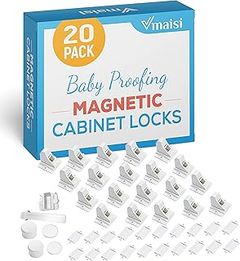
Magnetic Cabinet Locks (Multipack)
- Best cost-per-lock for securing a whole room
- Hidden internal mount keeps cabinets looking clean
- Works on both cabinets and drawers, includes two keys
- Strong 3M adhesive designed for wood and laminate
- Nearby metal or screws can interfere with the magnet
- Adhesive needs careful surface prep to hold long-term
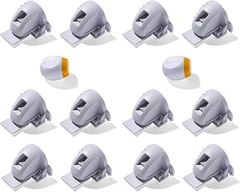
Magnetic Locking System
- Long-standing, widely trusted baby-safety brand
- Dual-magnet design and included install template
- Hidden internal mount, no drilling required
- Adhesive still needs a clean surface and proper placement
Magnetic vs strap vs slide: the honest trade-offs
Each mechanism has a real weakness, and knowing it helps you choose:
| Lock type | Best for | Watch out for |
|---|---|---|
| Slide (U-shaped) | Double doors with two handles | Only works where two handles sit close together |
| Magnetic (hidden) | A clean look, strongest child resistance | Nearby metal/screws can interfere; adhesive needs prep |
| Adhesive strap | Odd surfaces, single doors, appliances | Visible tab can tempt a toddler; needs a grease-free surface |
The pattern from testing is consistent: magnetic locks resist a determined child longest, but every adhesive-mounted lock lives or dies by surface prep. Under a sink, where surfaces get greasy and damp, clean the mounting spot thoroughly with rubbing alcohol before you stick anything, or the lock you trusted will be on the floor within a week.
Which cabinets actually need locking (and the order)
You don't have to lock every cabinet in the house, and trying to will only exhaust you and your budget. Work in priority order, worst first:
The under-sink cabinet is non-negotiable, in the kitchen and every bathroom. It's where cleaners, drain products, and often medicines concentrate at child height. Lock it before anything else.
Next, any cabinet or drawer holding chemicals, medicines, or sharp tools, the laundry cupboard, the cleaning cabinet, the knife drawer. These are the genuine hazards. A determined toddler treats the kitchen like an obstacle course, and the one you skip is usually the first they open.
Lower down the list: the pantry and food cupboards, worth locking mostly to save your floor from a spilled bag of rice, not for safety. And the pots-and-pans cabinet is genuinely optional, a banging toddler with a saucepan is loud, not in danger. Spend your locks where the real risks are, and don't feel you've failed by leaving the harmless cabinets open.
The rules that make any lock work
Whatever you buy, a few habits decide whether it actually protects:
Buy more than you think you need. The cabinet you decide isn't worth locking is usually the one your child figures out first. Lock the under-sink cabinet without question, then the pantry, then anything holding chemicals or sharp tools.
Prep the surface for adhesive locks. Wipe the mounting area with rubbing alcohol, let it dry fully, and press firmly. Give the adhesive a full day to cure before testing it. This one step is the difference between a lock that holds for years and one that fails in days.
Re-latch every single time. A lock only works when it's engaged. Build the habit of closing it fully, the same way you'd never leave the under-sink door standing open with a toddler in the room.
Keep magnets away from children. Loose magnetic keys and spare magnets are themselves a serious hazard if swallowed. Swallowed magnets can pull together across loops of intestine and cause severe internal injury, so treat spare magnets and keys as carefully as you'd treat the chemicals you're locking away. Store the key up high, well out of reach.
Frequently asked questions
What's the best lock for an under-sink cabinet?
It depends on your cabinet. For the common double-door cupboard with two handles, a U-shaped slide lock is often the simplest and most reliable, it threads through both handles with no adhesive to fail. For a hidden look or the strongest resistance to a determined child, an internal magnetic lock is excellent. Match the mechanism to your cabinet type first.
Are magnetic or adhesive cabinet locks better?
Magnetic locks tend to resist a determined toddler longest, because there's nothing visible to grab or pry, and they're hidden inside the cabinet. Adhesive strap locks are more versatile for odd surfaces and single doors, but they depend heavily on a clean, grease-free mounting surface to stay put. Under a sink, prep the surface carefully whichever you choose.
How do I childproof an under-sink cabinet without drilling?
Both magnetic locks (with adhesive mounting) and U-shaped slide locks are no-drill options. Slide locks need no adhesive at all, they simply thread through the two door handles, making them ideal for renters. For hidden magnetic locks, clean the mounting surface thoroughly with rubbing alcohol first so the adhesive holds.
Do cabinet locks damage cabinets?
No-drill adhesive and slide locks generally don't damage cabinets, though adhesive can sometimes leave slight residue on removal, which usually cleans off. Drill-mounted locks leave small screw holes. For renters, stick to slide locks or adhesive-mounted magnetic locks and remove them carefully when you move.
Sources
- American Association of Poison Control Centers — Household cleaning substances among top child exposures.
- U.S. Consumer Product Safety Commission — Check before buying; magnet-safety warning.
More on Kitchen Safety
Browse every guide and comparison we've published in Kitchen Safety.
Keep reading

Olive Tina
I lived through a kitchen grease fire in my own home. Afterward, I spent months researching what would have actually stopped it — that's how HouseholdShield started.