Best kitchen fire-safety bundles
A single fire extinguisher isn't a fire-safety plan. The best kitchen fire-safety bundles cover detection, suppression, and escape together. Here are the strongest pre-made kits, and how to build your own for less.
Most people own exactly one piece of fire-safety equipment: a single extinguisher, bought years ago, sitting in a cupboard, possibly expired. That isn't a fire-safety plan. Real kitchen fire safety has three parts working together: something to detect a fire (alarms), something to stop a small one (an extinguisher or blanket), and a way to escape a large one. A good bundle covers all three, which is why buying a kit can make more sense than grabbing a lone extinguisher.
The catch is that "bundle" ranges from a genuinely useful three-part kit to a box of things you didn't need. Let me show you what a kitchen fire-safety kit should actually contain, the strongest pre-made bundles, and, honestly, how to build a better one yourself for about the same money.
What a real kitchen fire-safety kit contains
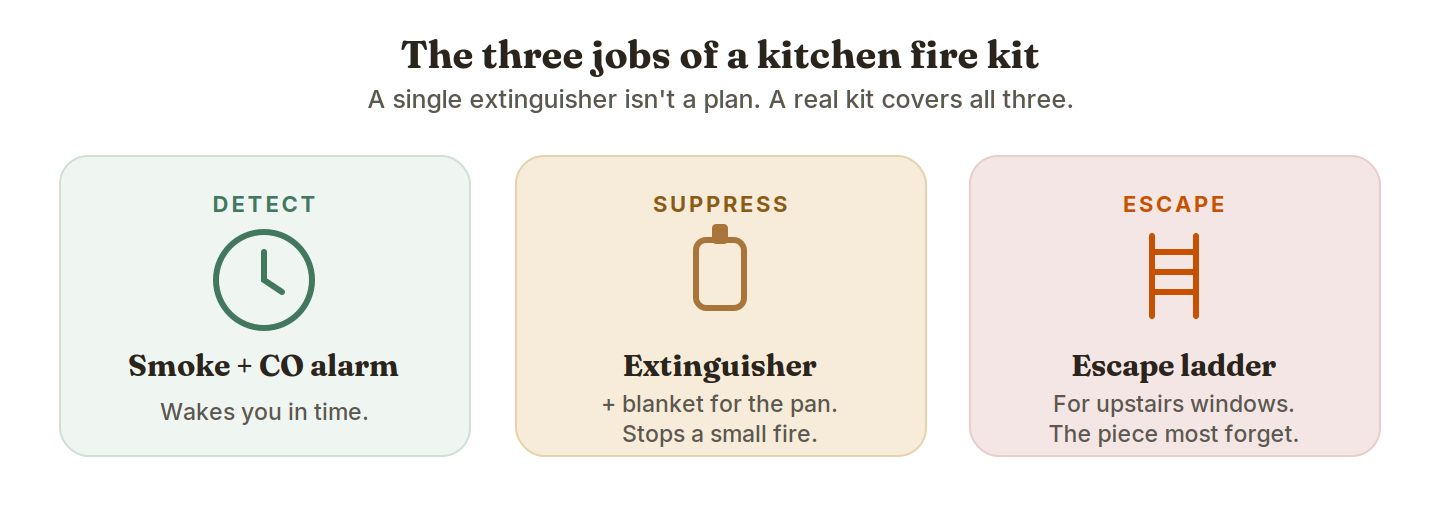
Before you buy any bundle, know the three jobs it needs to cover. This is your checklist:
Detection, a working smoke and CO alarm. The NFPA recommends a smoke alarm on every level and outside sleeping areas. In a kitchen context, a combination smoke and carbon monoxide alarm covers both fire and the odourless gas that fuel-burning appliances can produce. This is the piece that wakes you up in time.
Suppression, the right extinguisher plus a fast first response. For the kitchen you want a multipurpose extinguisher rated for common household fires (look for an A:B:C rating), and ideally a faster, simpler first-response tool for a small pan fire, a fire blanket or an aerosol spray, since most people hesitate to pull a big extinguisher for a stovetop flare. The two together cover both the small flare and the bigger fire.
Escape, a way out. For a multi-storey home, an escape ladder for an upstairs window is the piece almost everyone forgets, and the one that matters most once a fire is beyond fighting.
A bundle that covers those three is worth having. One that's just three sizes of the same extinguisher isn't. Keep that checklist in mind as you compare.
How I chose these
I researched and compared the home fire-safety bundles and components most consistently recommended, from the big trusted names in fire safety, against the three-part checklist above: detection, suppression, and escape. I looked at what each kit actually includes, whether the pieces are the right type for a kitchen, and whether a pre-made bundle beats assembling your own. I haven't tested these myself. Each pick below suits a different buyer, from "one box, done" to "build it right."
The picks
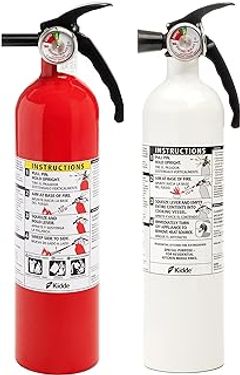
Kitchen + Home Fire Extinguisher Set
- Two extinguishers, whole-home plus kitchen-specific
- Strong per-unit value versus buying singly
- Trusted brand, widely available and UL-rated
- Mounting brackets included
- Extinguishers only, no alarm or escape ladder
- Pair with a combo alarm for full coverage

Fire Escape Cloak, Extra Big
- Hooded, full-body coverage rather than a flat blanket you have to hold
- This fire cloak emergency does not expire.
- The reflective strip are more obvious at night, orange fiber fireproof cloak can easy to be found, and increases the chance of being rescued at night.
- An aid to getting out quickly, not a substitute for it; smoke is the real danger, so stay low and leave fast
- One layer of a plan, pair it with alarms and an escape ladder
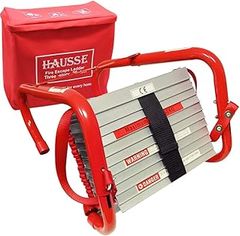
Retractable 3-Story Fire Escape Ladder (25 ft)
- No assembly or tools are required, easy to use and fast to deploy.
- Strong and durable escape ladder, slip-resistant rungs provide a steady foothold.
- Wide anti-slip pedals and stabilizing standoffs, can support a up to 1000 lbs weight.
- Folds compact despite the extra length
- Single-use; inspect and replace after deployment
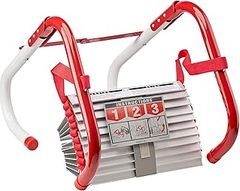
Fire Escape Ladder
- Rails are constructed of red nylon straps for a secure grip
- Anti-slip rungs and standoffs hold it away from the wall for footing
- Deploys in seconds, no tools or permanent install
- Stores flat under a bed or in a closet near the window
- Single-use in a real fire (inspect and replace after any deployment)
- For 2-story homes; taller homes need the longer version
Pre-made bundle vs build your own
Here's the honest trade-off most guides won't tell you:
| Approach | Best for | Trade-off |
|---|---|---|
| Pre-made bundle | Convenience, gifting, one purchase | May include pieces you don't need |
| Build your own | Getting exactly the right pieces | Takes a little research (this guide) |
A pre-made bundle wins on convenience and makes a genuinely thoughtful gift, especially for a new homeowner or a college student's first apartment. Building your own wins when you want precisely the right pieces: a good combo alarm, an A:B:C extinguisher, a fire blanket for the stove, and an escape ladder if you're upstairs, with nothing wasted. For most people, either is far better than the single lonely extinguisher they own now. The worst choice is the one most homes make, which is to do nothing beyond that.
Who each approach suits best
A fire-safety kit isn't one-size-fits-all, and matching it to your living situation saves money and gaps alike.
For a new homeowner or a first apartment, a complete pre-made bundle is genuinely the smartest single purchase, it covers the three bases at once, and it's one of the most useful housewarming gifts you can give. Most young renters own nothing beyond a lone smoke alarm the landlord installed, so a bundle is a real step up.
For a family home, building your own usually wins, because you want coverage matched to the house: a combo alarm on each level, an extinguisher near the kitchen and another near bedrooms, a fire blanket at the stove, and an escape ladder for each upstairs bedroom. A single boxed kit rarely scales to a whole house, so treat a bundle as the starting point and add to it.
For a college student's dorm or small flat, keep it minimal but real: a fire blanket and an aerosol spray by the cooking area, plus whatever alarm the building requires. Space is tight and cooking is limited, so the fast first-response tools matter more than a full extinguisher.
The common thread: almost any of these beats the single expired extinguisher most homes rely on. Start where your living situation puts you and build from there.
Where to put everything
Buying the kit is half the job; placement is the other half. A few rules:
Keep the extinguisher near the kitchen exit, not next to the stove, so you're never reaching through a fire to grab it. Mount it where you can grab it on your way out. Keep the fire blanket within arm's reach of the stove, since that one you do want close, for smothering a pan fast. Put smoke and CO alarms outside the kitchen (not directly above the stove, where cooking steam causes false alarms) and on every level. Store the escape ladder in the upstairs bedroom whose window you'd use. And check the extinguisher's gauge and the alarms' batteries on a schedule, safety equipment only works if it's maintained.
Frequently asked questions
What should be in a home fire-safety kit for the kitchen?
Three things working together: detection (a combination smoke and carbon monoxide alarm), suppression (a multipurpose A:B:C fire extinguisher plus a fire blanket or aerosol spray for fast first response on a pan fire), and escape (an escape ladder for upstairs windows in a multi-storey home). A kit covering all three beats owning a single extinguisher.
Are pre-made fire-safety bundles worth it?
For many people, yes, they're convenient, cover the key bases, and make a thoughtful gift for a new home or apartment. The main downside is they can include pieces you don't need. If you want exactly the right components with nothing wasted, building your own from a combo alarm, an A:B:C extinguisher, a fire blanket, and an escape ladder is often just as affordable.
Where should I keep a fire extinguisher in the kitchen
Near the exit, not right next to the stove, so you never have to reach through a fire to get it. Mount it where you can grab it on the way out of the room. Keep a fire blanket closer to the stove for smothering a pan fire fast, and make sure everyone in the home knows where both are.
More on Kitchen Safety
Browse every guide and comparison we've published in Kitchen Safety.
Keep reading

Olive Tina
I lived through a kitchen grease fire in my own home. Afterward, I spent months researching what would have actually stopped it — that's how HouseholdShield started.