Best Gas Leak Detectors for a Home Kitchen: Honest Picks for 2026
Most people buy the wrong type of gas detector. Here's how to choose the right one for your kitchen—and the three models I'd recommend.
The hardest part of buying a gas detector is not choosing a brand. It is realizing that the three things sold under that name do completely different jobs, and that the one most people reach for first is often the one that will not help them at night.
So, before any product names, let me sort out which type you actually need. Get that right, and the rest is straightforward. Get it wrong, and you can spend real money on a device that was never going to protect you.
If you have not read it yet, the companion piece to this one explains why your carbon monoxide alarm will not catch a gas leak, and where each detector has to be mounted to work. Start there if the whole subject is new to you.
Three devices, and why the difference matters
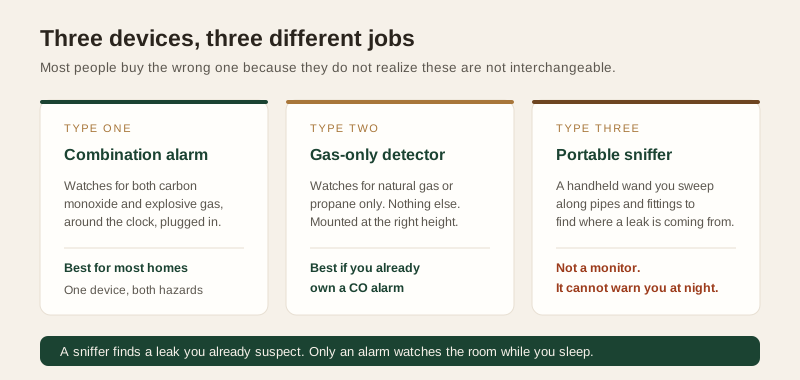
A combination alarm watches for both carbon monoxide and explosive gas, continuously, plugged into the wall. It is the sensible default for most homes, because it covers two hazards with one device and one place to check.
A gas-only detector watches for natural gas or propane and nothing else. This is the right choice if you already own a carbon monoxide alarm you trust and simply need to close the gas gap. A portable sniffer is a handheld wand you sweep along pipes, fittings, and appliance connections to find where a leak is coming from. It is genuinely useful, and it is also the one people most often buy by mistake. It cannot warn you at three in the morning. It only works when a human is holding it and actively looking. So it belongs alongside an alarm, never instead of one.
That distinction is the whole reason for this article. A sniffer finds a leak you already suspect. An alarm watches the room while you sleep.
What to check on the box
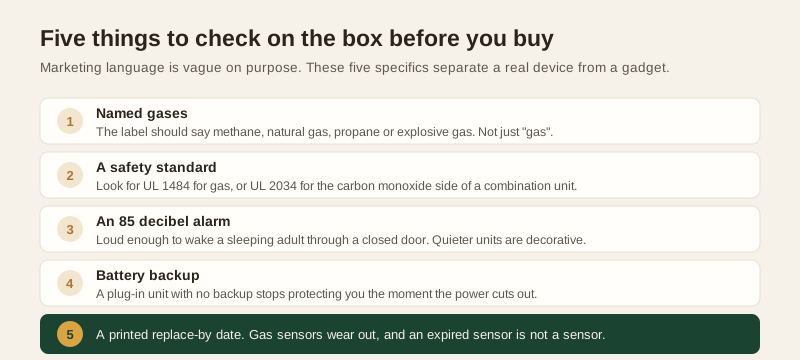
Marketing copy in this category is deliberately vague, so I judge these on five specifics instead. The named gases come first. A trustworthy label states "methane," "natural gas," "propane," or "explosive gas." If the packaging only says "gas detector" without naming anything, treat that as a reason to look elsewhere.
Then a recognized safety standard. For the gas side, you want UL 1484, and for the carbon monoxide side of a combination unit, UL 2034. Their presence tells you the device was assessed against something rather than simply manufactured.
An 85-decibel alarm is the practical minimum, because that is roughly the level required to wake a sleeping adult through a closed door. An alarm that's too quiet may not wake sleeping occupants, which defeats much of its purpose. And a printed replace-by date. Gas sensors degrade over time, whether they have ever detected anything or not. A unit with no stated lifespan is a unit that will quietly stop working and never alert you.
"Prices and availability change frequently, so I focus on safety features, certifications, and long-term reliability rather than today's lowest price."
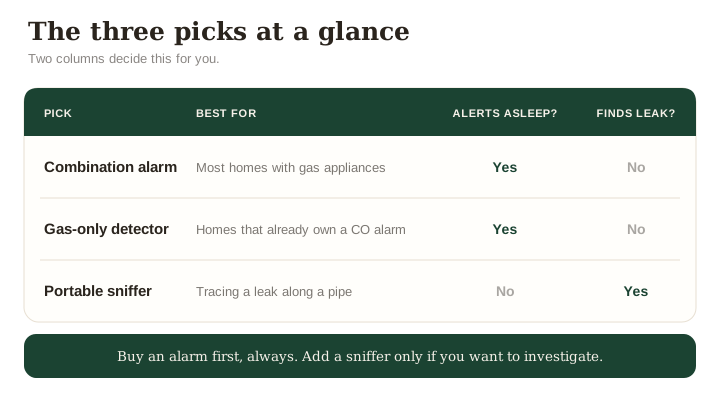
Read the last two columns, and the shape of it becomes obvious. Buy an alarm first, always. Add a sniffer only if you want the ability to investigate.
My picks
Each product links straight to Amazon, so you can check the current price and availability, which changes too often for me to quote here. I have researched and compared these rather than installed them all, and I will say plainly where each one has a downside.
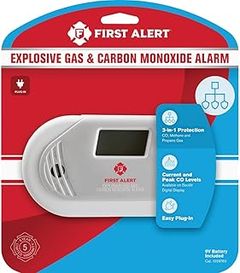
Combination explosive gas and carbon monoxide alarm
This is the one I would fit first in a home that cooks with gas. It detects both propane and methane on the explosive gas side and carbon monoxide from faulty appliances and blocked flues on the other. It plugs straight into an outlet with no mounting hardware, which removes the main reason people put these off. The honest caveat is that placement still matters even with a plug-in unit, so choose your outlet by height rather than convenience.
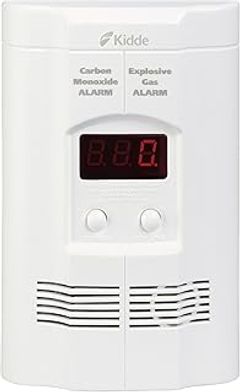
Carbon Monoxide + Explosive Gas, Natural Gas & Propane Alarm
A well-regarded, long history of reliability offers an alternative that monitors continuously and gives regular level readings rather than staying silent until something is wrong. It runs from an outlet with a battery for outages. One genuine drawback reported by reviewers is that it is sensitive enough to react to everyday fumes such as nail polish, paint, or cooking with wine, so keep it away from where those things happen regularly, or you will be silencing it more often than you would like.
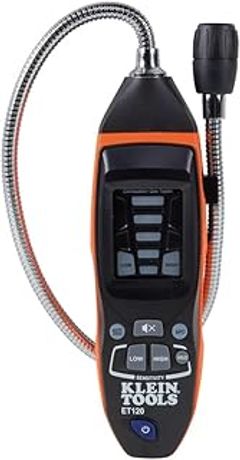
Portable gas leak sniffer
This is the investigative tool, not the guardian. If you have ever caught a faint smell near the stove and had no way to tell whether you imagined it, this is what answers that question. Many models use a flexible gooseneck so you can reach behind appliances and along awkward pipe runs. Buy it as a companion to an alarm, never as a replacement, and remember that a suspected leak still means leaving the building and calling your gas utility rather than investigating heroically.
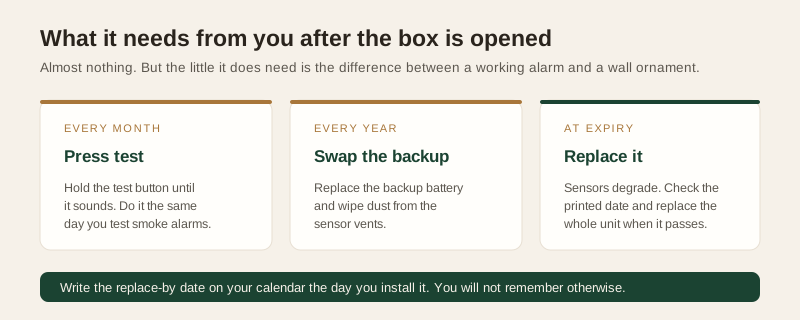
Very little, but the little it asks is the difference between a working alarm and an ornament.
Press the test button once a month, on the same day you test your smoke alarms, so it becomes one habit instead of two. Replace the backup battery yearly and wipe dust away from the sensor vents while you are there. And when the printed replace-by date arrives, replace the whole unit rather than hoping.
My one practical suggestion, and I mean this genuinely: write the replace-by date in your phone calendar on the day you install it, with a reminder set a month before. Nobody remembers a date printed on the back of a device four years later.
Which one should you actually buy?
If you cook with gas and own nothing, buy the combination alarm. It closes the biggest gap for the least thought, and it covers a second hazard you also need covered.
If you already have a carbon monoxide alarm you trust and it is in date, a gas-only detector is the cheaper, more targeted purchase.
If you have a specific suspicion, a smell near a fitting or an appliance you are unsure about, add a portable sniffer to whatever alarm you already have. But please do not let a sniffer be your only device, because it protects you exactly as long as you are holding it.
And whatever you decide, do the free thing tonight. Go and read the label on the alarm already on your wall and find out what it actually detects. Most people discover it does less than they assumed, and that discovery is worth more than any purchase on this page.
For the fuller explanation of why these devices differ, read do you need a gas leak detector? For everything across fire, gas, burns and childproofing in one place, see the complete kitchen safety guide. And if grease is the risk that worries you most, start with how to prevent a kitchen grease fire.
Frequently asked questions
What is the best type of gas leak detector for a home kitchen?
For most homes, a plug-in combination alarm that detects both explosive gas and carbon monoxide. It covers two separate hazards with one device and monitors continuously, which a handheld sniffer cannot do.
Will a gas detector also detect carbon monoxide?
Only if it is a combination unit and says so explicitly on the packaging. A detector labeled only for natural gas, propane or explosive gas will not sense carbon monoxide, and a carbon monoxide alarm will not sense a gas leak.
Are plug-in gas detectors better than battery ones?
Plug-in units are easier to live with because there is no main battery to run flat, but they need to be plugged in at the correct height for the gas you use, and they should still have a battery backup for power cuts. Battery models give you more freedom over placement, at the cost of remembering to change the battery.
How long does a gas leak detector last?
Sensors degrade over time regardless of use. Most units carry a printed replace-by date, commonly somewhere in the five- to ten-year range, depending on the model. When that date passes, replace the whole unit rather than the battery.
Do I need a gas detector if I have an electric stove?
Not for the stove itself. But check the rest of the house, because a gas water heater, furnace, dryer or fireplace also brings gas into the building. If there is no gas anywhere and no propane tank, put your attention on smoke and carbon monoxide alarms instead.
Why does my gas detector keep going off for no reason?
These sensors can react to household fumes such as aerosols, nail polish remover, fresh paint, cleaning products and alcohol vapor from cooking. If yours alarms during those activities, move it away from where they happen. If it alarms with no obvious cause, treat it as real, leave the building, and call your gas utility from outside.

Olive Tina
I lived through a kitchen grease fire in my own home. Afterward, I spent months researching what would have actually stopped it — that's how HouseholdShield started.