Do You Need a Gas Leak Detector If You Cook With Gas? The Honest Answer
Most people assume their carbon monoxide alarm will catch a gas leak. It will not. If you cook with gas, here is what you should know, which almost nobody mentions.
The night my sister's kitchen nearly burned down, everyone remembers the oil and the flames. But there's a detail I keep coming back to, one that took me years to sit with: the gas had been on the whole time. A small blue flame, turned down to its lowest setting, quietly burning under that pot while I fell asleep. I never noticed it. It wasn't dramatic. It didn't hiss or warn me. It just sat there doing exactly what I'd forgotten to, which is turn off.
That's the thing about gas that scares me most now. Not the roar of a fire — the quiet. The flame you don't see. The burner you didn't hear click all the way off. The smell you'd swear you'd notice, right up until the moment you don't.
After that night, I went down a rabbit hole trying to understand every way gas can hurt you when you're not paying attention — and I found that most of us are protected against far less than we think. So if you cook with gas and you've ever wondered whether you actually need a gas leak detector, let me give you the honest answer, along with the things I wish someone had told me sooner.
First, the honest answer
Yes. If you cook with gas — or have any gas appliance, a furnace, a water heater, a dryer — a dedicated gas leak detector is worth having. Not because your house is likely to explode tomorrow, but because the one scenario it protects against is the one you can't protect yourself against: a leak you can't smell, at a time you're not watching.
So a home can have a perfectly good CO alarm, chirping happily every month when tested, while natural gas quietly fills the kitchen. if you cook with gas, a gas leak detector is worth having, and it is not a duplicate of anything you already own. However, that answer comes with three things that almost nobody tells you, and they matter more than the brand you buy.
Your carbon monoxide alarm is not a gas leak detector
This is the correction I would most like every gas-cooking household to hear. Carbon monoxide is produced when fuel burns incompletely, from a faulty furnace, a blocked flue, or a car running in a garage. If you have a carbon monoxide detector plugged into your kitchen wall, it feels like you're covered. You are not — at least not for a gas leak.
It is odorless and it kills quietly, which is exactly why CO alarms exist and why you should have one. Natural gas and propane are the raw fuel itself, leaking before it ever burns.
A CO detector is calibrated to sense carbon monoxide molecules and nothing else. Methane could be filling your kitchen and your CO alarm would sit there silent, because it's simply not built to notice it.
Put as plainly as I can: a CO leak poisons you; a gas leak builds toward ignition. Different danger, different sensor, different device.
The risk is different, too. A CO leak poisons you. A gas leak builds toward ignition. Different danger, different sensor, different device.
So the setup most of us have is a smoke alarm and a CO detector, which leaves a real gap. Those two catch fire and catch combustion fumes. Neither one catches the raw gas leaking from a burner left cracked open or a loose fitting behind the stove.
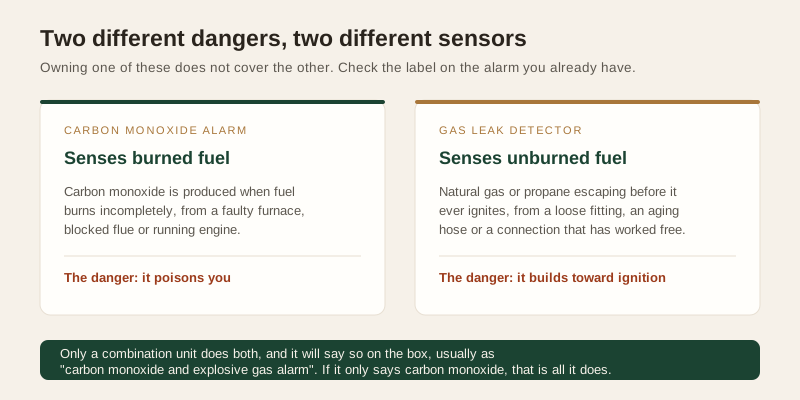
Some units do both. If your alarm is a combination model, the packaging will say so explicitly, usually with wording like combination carbon monoxide and explosive gas alarm. If it only says carbon monoxide, it only does carbon monoxide. Go and read the label on yours tonight. That one small act is the whole point of this article.
"But I'd smell it" — why that's not the safety net you think
The next thing people tell me is, "Natural gas smells like rotten eggs — I'd smell a leak before it mattered."
I understand why we believe that, and it's partly true. Natural gas and propane are naturally odorless, so gas companies add a chemical called mercaptan to give them that unmistakable rotten-egg, sulfur smell. That warning smell has saved countless lives.
But here's what the tidy articles leave out. Your nose is not a reliable alarm:
- Olfactory fatigue is real. After even a short time around a smell, your brain tunes it out you literally stop noticing it. So, a slow leak you smelled when you walked in can "disappear" to you while it keeps building.
- You can't smell anything while you're asleep; A leak at 3 a.m. doesn't wake most people up. (That was the whole terror of my sister's night I was unconscious.)
- Some people can't smell it well at all: a stuffy nose, age, certain medical conditions, or a phenomenon called odor loss, where the additive fades and the gas goes nearly scentless.
- A good detector alarms before the gas ever reaches a level you'd smell, let alone an explosive one. It buys you the minutes that matter.
A detector doesn't get tired, doesn't sleep, and doesn't adapt to a smell it's been sitting in. Your sense of smell is a backup. It is not a plan.
The thing almost nobody tells you: gas stoves leak even when they're off
This one genuinely stunned me, and I'd read a dozen "gas safety" articles before I found it.
Peer-reviewed research from Stanford University and PSE Healthy Energy found that gas stoves leak small amounts of unburned gas continuously — even when every burner is turned off, through tiny leaks at fittings and connections nobody would ever notice. When researchers sampled homes, nearly all of the stoves were leaking methane, along with hazardous pollutants including benzene, a known carcinogen. And critically: these low-level leaks aren't detectable by smell at all.
Now, I want to be careful and honest here, because your trust matters more to me than a scary headline. Two things are true at once:
- 1This is about chronic, low-level air quality — a long-term health question, not a "your house will explode tonight" question. (The gas industry disputes how significant the exposure is; the researchers stand by the findings.) A combustible-gas alarm is calibrated for acute, explosive leak levels, so it won't chirp over these tiny background emissions.
- 2That doesn't mean the low-level stuff is nothing. It means the fix is different: good ventilation. Run your range hood every time you cook (vented outside, ideally), crack a window, and consider an air purifier rated for VOCs.
- 3It also quietly undercuts the assumption that a gas appliance is completely inert when it's off. Fittings loosen. Hoses age. Connections that were fine on installation day aren't automatically fine a decade later. That's the honest case for a detector — not fear, just the recognition that the failure here is silent and gradual, and silent, gradual problems are exactly the kind we humans are worst at noticing.
So the honest takeaway is layered: a gas leak detector guards against the acute, dangerous leak. Ventilation and awareness handle the chronic low-level emissions. Most articles blur these two together. They're different problems with different answers, and you deserve to know which tool does which job.
Where to put it, and why height decides everything
Here's where good intentions go to waste. A gas detector mounted in the wrong spot can fail to warn you until a room is dangerously full — and the "right spot" is the exact opposite depending on which gas you use. This is basic physics, and it's the detail generic guides skip:
- Natural gas (methane) is lighter than air. It rises. So a natural-gas detector belongs high — mounted within about 6 to 12 inches of the ceiling, where the gas collects first.
- Propane is heavier than air. It sinks. So a propane detector belongs low — within about 6 inches of the floor, where propane pools like an invisible liquid.
Put a natural-gas detector down at outlet height and a leak could fill the top half of your kitchen before it ever reaches the sensor. Put a propane detector up high and it might never alarm at all. Match the height to your gas.
Not sure which fuel you have? Look at the supply. A pipe running into the wall usually means natural gas from the main source, mount the detector high. A refillable tank (common in homes and for outdoor grills) means propane; mount it low.
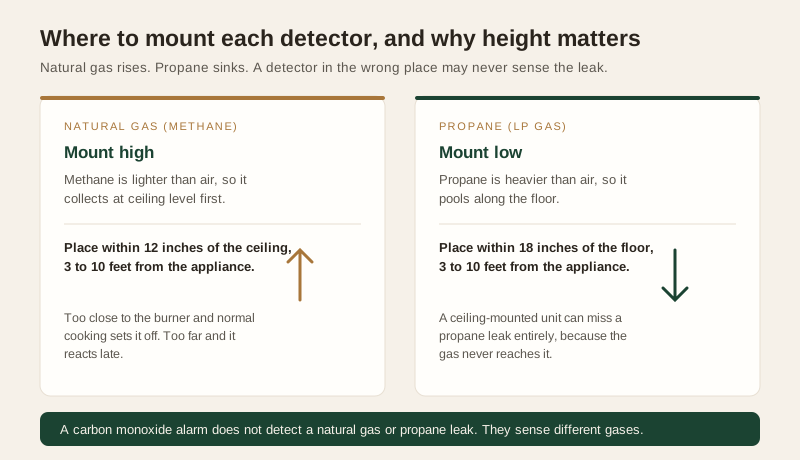
A couple more placement notes that save you from false alarms and blind spots: mount it a few feet away from the stove itself (too close and normal cooking sets it off, so aim for roughly 3 to 10 feet from the appliance), and keep it away from windows, exterior doors, and vent fans (moving air disperses the gas before the sensor can catch it). And like every safety device, gas alarms have a service life — check the replacement date and don't run one past it.
What each device actually senses
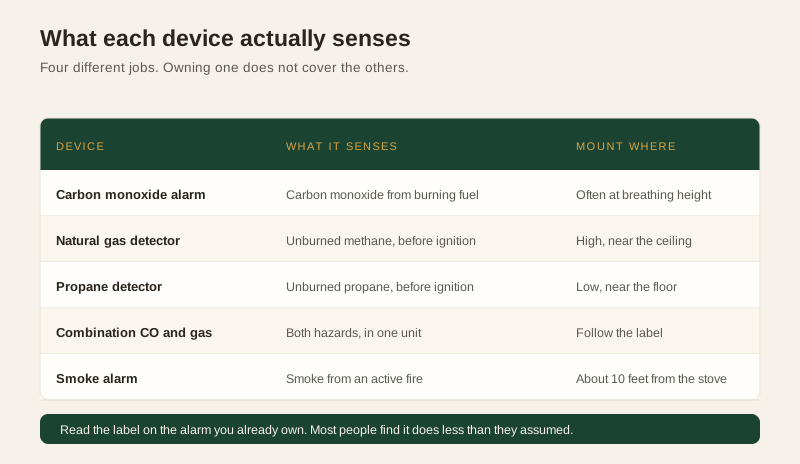
Read that table once, and the picture becomes clear. These are four different jobs. Owning one of them does not cover the others.
What to do if you ever smell gas
Please read this before you need it, because the instinct to investigate is strong, and it is the wrong instinct.
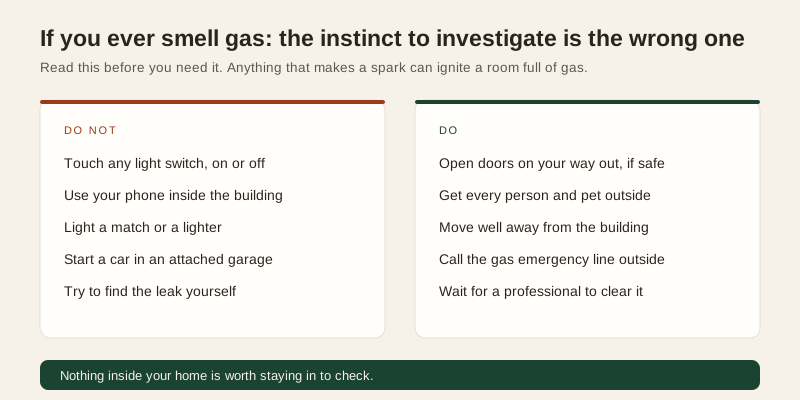
Don't:
- Don't turn any switch on or off, including a light switch — the spark can ignite gas.
- Don't use your phone inside the building.
- Don't light a match or a lighter to "see better."
- Don't try to find the leak yourself.
Do:
- Open doors and windows on your way out, if it's safe to do so.
- Get everyone outside.
- Once you're outside and away from the building, call your gas utility's emergency line or emergency services.
- Let a professional confirm it's safe before anyone goes back in.
Nothing in your kitchen is worth staying inside to check.
The way I think about it now
If you cook with gas, yes, and especially if anyone in the house sleeps near the kitchen, has a reduced sense of smell, or if your appliances and fittings are more than a few years old. It is an inexpensive device covering a risk.
I don't want you to live afraid of your kitchen. I cook. I love a gas flame. The point was never fear, it was layers so that no single bad moment can undo you:
- A smoke alarm to catch fire.
- A carbon monoxide detector near sleeping areas to catch combustion fumes.
- A natural gas or propane detector, placed at the right height, to catch the raw-gas leak; the other two can't.
- Your range hood running every time you cook, plus the oldest rule there is: never walk away from a lit burner.
Each one covers a gap the others leave open. Together, they mean the quiet flame I never noticed that night would have had something in that room watching for it even while I slept.
That's all peace of mind really is: something keeping watch when you can't.
If you cook on electric or induction with no gas anywhere in the home, no gas line, no propane tank, and no gas water heater or furnace, then a gas leak detector is not your priority. Put that attention into a working smoke alarm and a carbon monoxide alarm instead, since CO can come from other fuel-burning appliances.
And whichever camp you are in, do the free thing first. Go read the label on the alarm you already own and find out what it actually detects. Most people discover it does less than they assumed. For the wider picture across fire, gas, burns, and childproofing, see our complete kitchen safety guide. And if grease is your bigger worry, start with how to prevent a kitchen grease fire.
More on Kitchen Safety
Browse every guide and comparison we've published in Kitchen Safety.
Keep reading
Frequently asked questions
Do you need a gas leak detector if you have a gas stove?
If you cook with gas or have any gas appliance, yes. It's a genuinely worthwhile layer of protection. Its whole job is to warn you about a raw-gas leak you can't smell, at a time you're not watching (like while you sleep). It doesn't replace your smoke alarm or CO detector; it covers a gap those two leave open.
Does a carbon monoxide detector detect a natural gas leak?
No. Carbon monoxide alarms sense carbon monoxide, which is produced when fuel burns. A gas leak is unburned fuel and requires a different sensor. Only a combination unit that explicitly states it detects explosive or combustible gas will do both.
Can't I just smell a gas leak?
Not reliably. Gas companies add a rotten-egg odorant so leaks are noticeable, and often you will smell it. But your nose tunes out smells over time (olfactory fatigue), you can't smell anything while asleep, and some people, due to age, a stuffy nose, or odor-loss, can't detect it well. A detector alarms before gas reaches a level you'd smell, which is exactly when you need the warning.
Where should I put a natural gas detector?
High on the wall or near the ceiling, because natural gas is lighter than air and rises, so mount the detector within about 6 to 12 inches of the ceiling. Keep it roughly three to ten feet from the appliance so normal cooking does not trigger it and away from windows, doors, and vent fans (which disperse the gas before it reaches the sensor).
Where should a propane detector be placed?
Low, within about eighteen inches of the floor, because propane is heavier than air and pools downward, so a propane detector should sit within about 6 inches of the floor, near the potential leak source. This is the opposite of natural gas placement depends entirely on which gas you use. A ceiling-mounted unit can miss a propane leak completely.
How long does a gas leak detector last?
Sensors wear out. Always follow the manufacturer's replacement date, depending on the model. Check the date printed on yours and replace it when it expires, the same way you would an expired extinguisher.
Do gas stoves really leak when they're turned off?
Yes, in small amounts. Peer-reviewed research found gas stoves continuously leak tiny amounts of unburned methane and pollutants like benzene, even when off, and these aren't detectable by smell. This is a long-term air-quality concern, not an explosion risk — the fix is good ventilation (run your range hood, crack a window) rather than a gas alarm, which is built to catch larger, acute leaks.
How long do gas leak detectors last?
Like smoke and CO alarms, gas detectors have a limited service life and lose sensitivity over time. Check the manufacturer's recommended replacement date, note it somewhere you'll see it, and replace the unit when it expires. An expired detector can give you false confidence, which is worse than none.
Do I need both a carbon monoxide detector and a gas leak detector?
Yes they protect against different, distinct dangers. A CO detector catches carbon monoxide from incomplete combustion (faulty furnace, blocked flue). A gas detector catches a raw natural gas or propane leak. Having one does not cover the other. For a home with gas appliances, both belong on the list.
What should I do if I smell gas in my kitchen?
Leave immediately without touching any switches or using your phone inside. Open doors on your way out if it is safe. Call your gas utility's emergency line or emergency services from outside, and do not return until a professional says it is safe.

Olive Tina
I lived through a kitchen grease fire in my own home. Afterward, I spent months researching what would have actually stopped it — that's how HouseholdShield started.